Splitter and Coupler
The term splitter and coupler are often encountered when working with RF systems, coaxial cabling, or distributed antenna systems DAS. While they can appear similar and both serve to distribute signals, they operate very differently and are used in different situations. Understanding the difference between a them is essential for designing efficient, reliable signal networks whether for Wi-Fi, mobile signal boosters, or professional RF installations.
What is a Splitter?
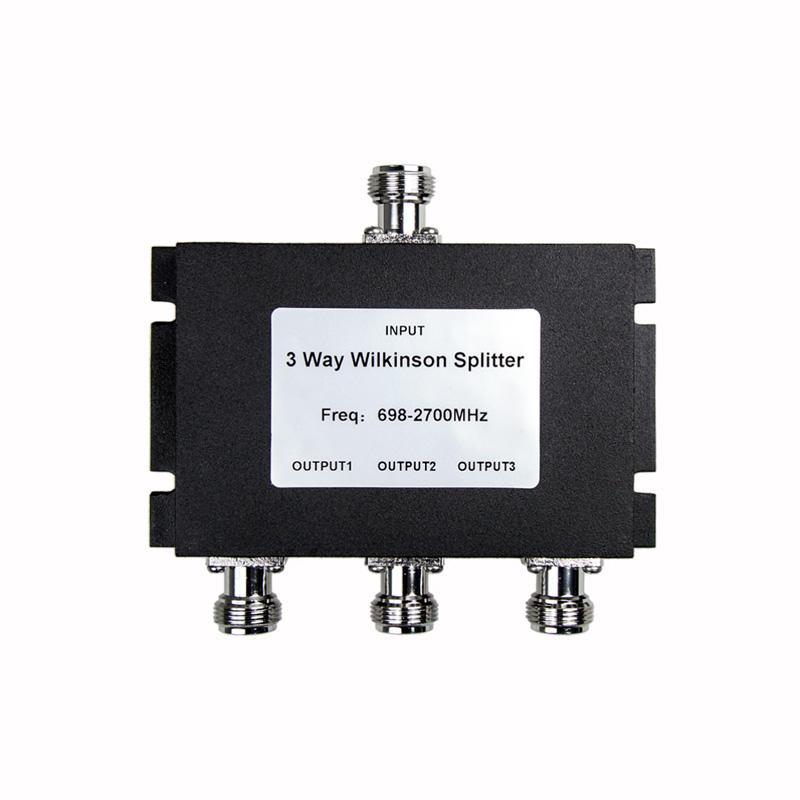
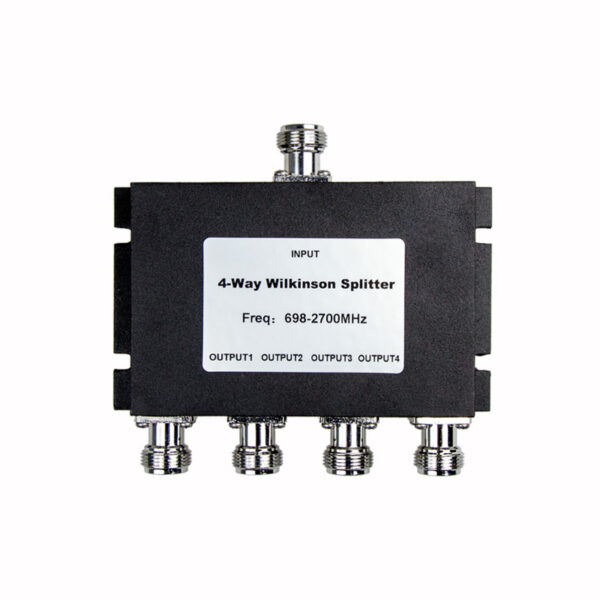
A splitter is a device that divides one signal source into two or more equal outputs. It splits the signal power evenly, meaning each output port receives the same level of signal (minus a small loss due to splitting). For example, a 2-way splitter divides the signal into two equal paths.
This are ideal when you need to send the same signal to multiple devices and each output requires similar strength. They are commonly used in:
- Professional RF systems and DAS (Distributed Antenna Systems)
- Mobile signal booster installations
- Repeaters and telecom equipment
- Large buildings or campuses where precise signal levels are required
When to use a splitter:
Use a splitter when you need multiple equal-strength signal outputs from a single source and signal levels are strong enough to handle the division. If the incoming signal is weak, it may reduce it too much, in which case amplification might be needed.
What is a Coupler?
A coupler (often called a directional coupler) is designed to tap a small portion of a signal while allowing most of the power to continue through the main line. Unlike a splitter, outputs are not equal one port passes most of the signal forward, and the other receives a reduced portion.
Couplers are typically used in:
- Professional RF systems and DAS (Distributed Antenna Systems)
- Mobile signal booster installations
- Repeaters and telecom equipment
- Large buildings or campuses where precise signal levels are required
When to use a coupler:
Use a coupler when you need to extract a controlled amount of signal without heavily reducing the main feed ideal for long cable runs or multi-floor systems where each antenna requires different power levels.
| Device | Purpose | Output Signal |
| Splitter | Divide equally | Even power to each port |
| Coupler | Tap small portion | Uneven power — controlled tap |
Choosing the right device ensures balanced performance. Also avoids signal loss problems, and keeps your RF or mobile signal system running at peak efficiency. If in doubt, consider signal strength, distances, and the number of devices before deciding between a splitter and a coupler.
Advantages of Couplers and Splitters
Couplers and splitters are vital for efficient mobile signal distribution. A splitter divides a single signal to multiple indoor antennas, ensuring consistent coverage across rooms, floors, or zones, making it cost-effective for homes, offices, and commercial spaces. A coupler shares or combines signals between paths with controlled isolation, ideal for monitoring or multi-antenna setups without interference. Both provide low insertion loss, preserving signal strength for 2G, 3G, 4G, and 5G systems. Together, they enhance network reliability, coverage, and installation flexibility, allowing scalable, high-performance mobile connectivity solutions for residential, commercial, and industrial environments.
Our expert team are always available to help with recommendations and installations of signal boosters and accessories. WhatsApp: 07874191006 Email Us: [email protected]