How a Good Mobile Phone Signal Can Help Reduce Mobile Radiation and Protect Your Health
-
Can a stronger mobile phone signal reduce radiation?
-
Does a weak mobile signal make a phone transmit more power?
-
Can a mobile signal booster reduce mobile phone radiation?
-
Does a signal booster eliminate RF radiation?
-
How can I reduce my exposure to mobile phone RF energy?
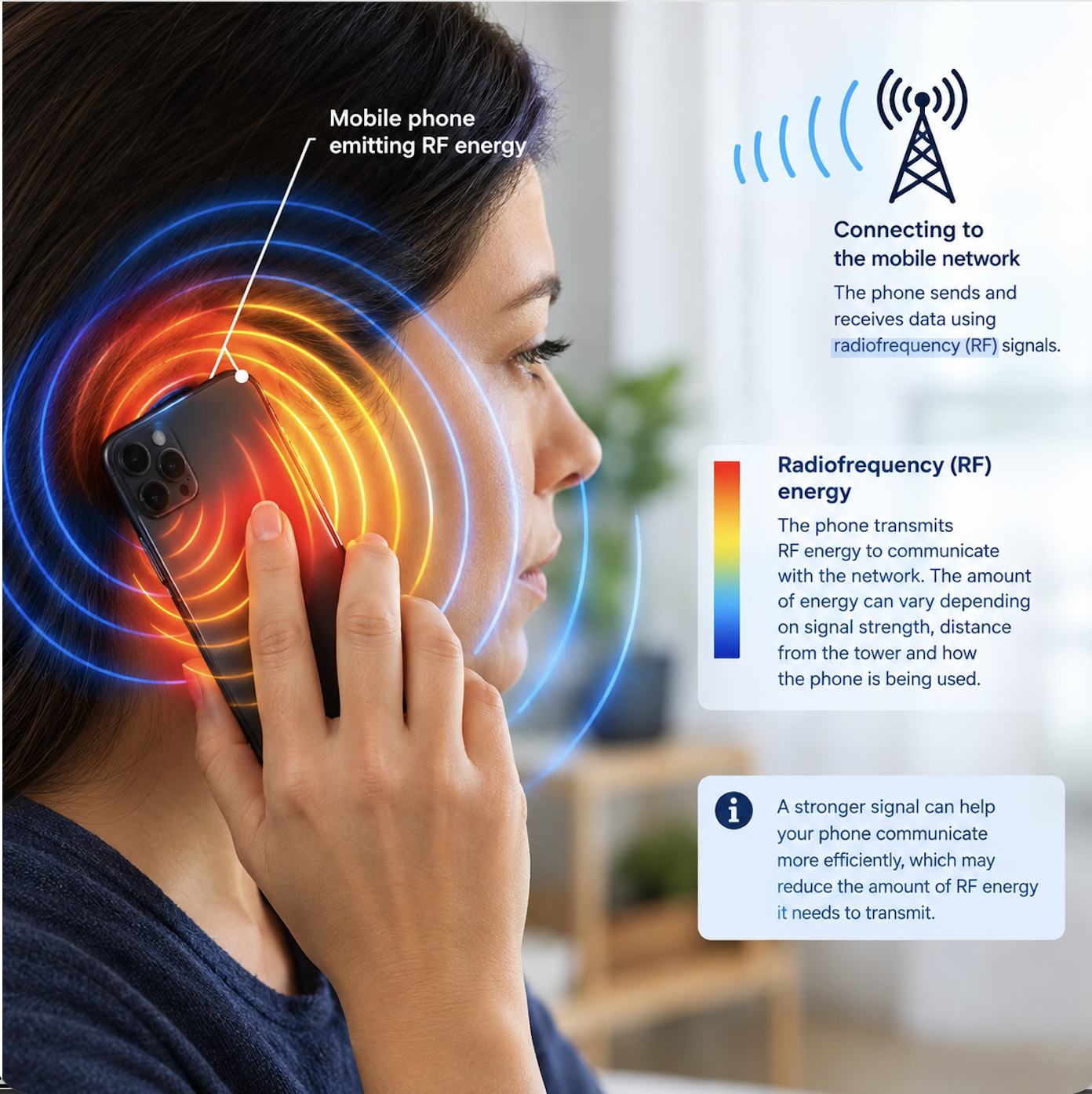
A strong and reliable mobile phone signal is important for clear calls, fast mobile data and better connectivity. But did you know that having a good mobile phone signal may also help your phone operate more efficiently and potentially reduce the amount of radiofrequency (RF) energy it transmits?
When mobile phone reception is poor, your phone may need to work harder to maintain a connection with the nearest mobile network. Improving mobile phone signal coverage at home, in the office or in other buildings can therefore help create a more reliable connection while allowing your phone to communicate more efficiently with the network.
What Happens When Your Mobile Phone Signal Is Weak?
Mobile phones continuously communicate with nearby cellular networks. When reception is strong, the phone can generally communicate with the network without needing as much transmit power.
When the signal becomes weak — for example, inside a building with thick walls, in a basement, warehouse or rural location — the phone may increase its transmission power to maintain the connection.
This is one reason why mobile phone signal strength matters.
A weak signal can also result in:
- Dropped or interrupted calls
- Slow 4G and 5G data
- Poor voice quality
- Phones searching for networks more frequently
- Increased battery consumption
- Higher transmission power in challenging reception conditions
Improving indoor mobile phone coverage can help provide a more consistent connection.
Can Better Mobile Signal Reduce Mobile Phone Radiation?
It is important to make a distinction between reducing exposure to radiofrequency radiation and eliminating it.
Mobile phones use radiofrequency electromagnetic energy to communicate with cellular networks. The amount of RF energy transmitted by a phone varies depending on factors including network conditions, distance from the base station, phone design and how the device is being used.
In general, when a phone has a poor connection, it can increase its transmit power to maintain communication with the network. A stronger signal can allow the phone to communicate using less transmit power.
Therefore, improving mobile phone reception may help reduce the RF transmission power of the handset, although it does not mean that radiation exposure is eliminated.
For people who want to take a precautionary approach, maintaining good signal coverage is one practical consideration alongside other measures such as using speaker mode or a headset and avoiding unnecessary prolonged calls.
Why Indoor Signal Strength Matters
Buildings can significantly weaken mobile phone signals. Concrete walls, metal structures, insulated roofs, energy-efficient windows and underground areas can all make it more difficult for mobile devices to communicate with outdoor cellular networks.
This can be particularly noticeable in:
- Homes and apartments
- Offices
- Warehouses
- Factories
- Hotels
- Retail premises
- Basements
- Rural properties
A mobile phone signal booster, when properly designed, installed and compliant with local regulations, can improve indoor cellular coverage by receiving an available outdoor signal and redistributing it inside the building.
A properly installed system can provide stronger and more reliable mobile connectivity in areas where the external network signal is available but indoor coverage is weak.
How Does a Mobile Signal Booster Work?
A typical signal booster system consists of three main components:
1. Outdoor donor antenna
The external antenna captures an available mobile network signal from a nearby cellular base station.
2. Signal booster
The booster amplifies and manages the received cellular signal.
3. Indoor antenna
The indoor antenna distributes the improved signal throughout the required area.
The objective is to improve cellular coverage inside the building without requiring every mobile phone to struggle to maintain a weak connection.
Does a Signal Booster Eliminate Mobile Phone Radiation?
No. A mobile phone signal booster does not eliminate RF radiation, and it should not be marketed as a device that guarantees protection from radiation or prevents health problems.
The purpose of a signal booster is to improve mobile network coverage and connectivity.
A better signal can, however, reduce the need for a mobile phone to transmit at higher power when operating under poor reception conditions. The actual transmit power of a phone depends on the network, device and circumstances.
It is therefore more accurate to say that good mobile reception can help a phone operate at lower transmit power under appropriate conditions, rather than claiming that a signal booster makes mobile phone use radiation-free.
Practical Ways to Reduce Mobile Phone RF Exposure
If you want to minimise your personal exposure to RF energy from mobile phones, several simple measures can be considered:
- Use speaker mode or a wired headset for longer calls.
- Keep the phone away from your body when practical.
- Avoid making lengthy calls when reception is very poor.
- Use mobile data or Wi-Fi where appropriate.
- Improve poor indoor mobile signal coverage.
- Avoid unnecessary prolonged phone use.
- Follow the manufacturer’s safety and usage guidance.
These measures can complement good mobile coverage and help users make informed decisions about how they use their devices.
Improve Your Mobile Phone Signal
A reliable mobile phone signal is essential for modern homes, businesses and workplaces. While a signal booster should not be presented as a health-protection device, improving poor reception can help mobile phones maintain a stronger connection and may reduce the handset’s need to transmit at higher power during weak-signal conditions.
For homes and businesses experiencing poor mobile phone signal, weak 4G or 5G coverage, dropped calls or slow mobile data, a professionally designed and compliant signal booster or distributed antenna system (DAS) may provide an effective way to improve indoor coverage.
Good mobile signal means better connectivity, more reliable communications and potentially lower handset transmission power when compared with operating under very weak signal conditions.
For more information about improving mobile phone reception in your home or business, explore the range of mobile phone signal boosters and 4G/5G signal solutions fromWaveBoosters.